
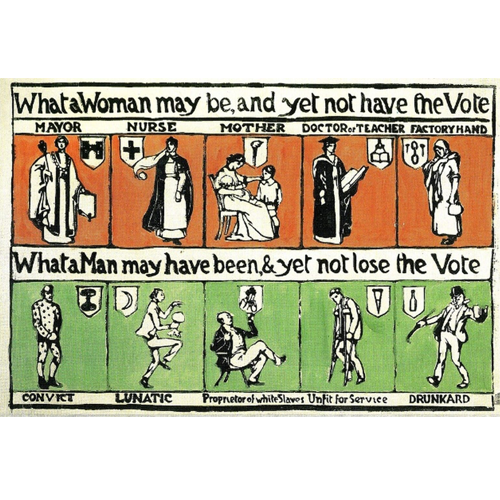
Understanding the Women’s Suffragette Movement.
A powerful and courageous fight led by empowered women who demanded one simple thing: the right to vote.
For most of modern history, women had no say in how their countries were run. They couldn’t vote in elections, run for office, or be part of most political decisions or discussions. That didn’t change because they were handed rights. It changed because women fought for those rights.
What does “Suffrage” Mean?
Suffrage is the right to vote in political elections, and a suffragist is someone who fights for that right.
Suffragettes were a specific group of more militant activists (especially in the UK) who believed in using bold, sometimes disruptive tactics to push for women’s voting rights.
Why Was the Right to Vote So Important to Empower Women?
In the 1800s and early 1900s, women were expected to stay in the private world of home and family, while men controlled the public world of work, money, and government. Without the vote, women:
- Had little say in laws that affected their lives.
- Were taxed without representation.
- Had fewer legal rights in marriage, education, property, and parenting.
The vote wasn’t just about politics; it was about being seen as equal human beings.
Where and When Did the Movement Begin?
The suffrage movement had many roots, but here are some key milestones:
United States:
- 1848: Seneca Falls Convention – This was the first women’s rights meeting in the U.S. Organised by Elizabeth Cady Stanton and Lucretia Mott, it demanded equal rights, including the vote.
- National Woman Suffrage Association (1869): Led by Stanton and Susan B. Anthony, this group focused on changing federal law.
- American Woman Suffrage Association: Worked more on getting state laws changed.
United Kingdom:
- Late 1800s: Women began organising and petitioning for voting rights.
- 1903: Women’s Social and Political Union (WSPU) – Founded by Emmeline Pankhurst and her daughters, this group became famous for more aggressive protest tactics and helped popularise the term “suffragette.”
What Did Suffragettes Actually Do?
The movement had many different styles of protest, some peaceful, others more confrontational. Here’s what suffragettes (especially in the UK) and suffragists (especially in the US) did:
Peaceful Actions:
- Organised marches and rallies.
- Gave speeches and held public debates.
- Collected signatures for petitions.
- Wrote articles, essays, and newspapers.
- Held parades to raise awareness.
More Radical Actions (especially in the UK):
- Chained themselves to railings outside government buildings.
- Broke windows of government offices.
- Went on hunger strikes in prison.
- Refused to pay taxes.
- Interrupted political meetings.
Some of these actions led to arrests, public backlash, and physical violence, but they also got people’s attention. That was the point. Many women felt that polite requests had been ignored for too long and that more visible actions were needed.
What Challenges Did They Face?
The suffragettes and suffragists were not welcomed with open arms. They were:
- Mocked in newspapers and cartoons.
- Arrested, sometimes many times.
- Force-fed when they went on hunger strikes in prison (a painful and dangerous process).
- Beaten by police and mobs during protests.
- Told they were “unfeminine” or “bad mothers” for caring about politics.
Many people believed women were too emotional, too fragile, or too unintelligent to vote. These were deep-rooted stereotypes, and the women had to fight those just as much as the laws themselves.
When Did Empowered Women Finally Win the Vote?
Progress didn’t happen overnight. It took decades of fighting.
New Zealand:
- The first self-governing country to grant women full voting rights in 1893.
Australia:
- Followed in 1902 (though not for Indigenous women).
Other countries:
- Many other countries followed in the mid-1900s.
United States:
- 1920: The 19th Amendment to the Constitution was passed. It gave (white) women the right to vote. Black, Indigenous, and other women of colour often still faced voter suppression.
United Kingdom:
- 1918: Some women (aged 30+, with property) got the vote.
- 1928: All women over 21 could vote on equal terms with men.
Did All Women Fight Together?
This is important to mention: no, not always.
- Some white suffragists in the US excluded Black women from their marches or ignored their concerns.
- Some groups supported women’s rights but didn’t challenge racism or classism.
- Many women of colour had to form their own organisations to be heard.
Sojourner Truth, Ida B. Wells, and Frances Ellen Watkins Harper were just a few Black women who fought for both gender and racial justice but were often left out of the mainstream movement.
This reminds us that social movements can make progress while still needing to do better.
Why Does This Still Matter?
Yes, it was 100 years ago. But the lessons still apply.
- Voter rights are still being debated and restricted around the world.
- Women are still underrepresented in political leadership.
- People often don’t vote in places where it is not compulsory.
And perhaps most importantly:
- The suffragette movement teaches us that change happens when people organise, speak up, and don’t give up. Even when it’s uncomfortable.
The Suffragette Movement Taught Us That
- Empowered women didn’t always have the right to vote, but they fought hard to win it.
- The movement was made up of everyday people who became extraordinary leaders.
- Not all suffragists agreed, but their shared goal changed the world and empowered us all.
- The right to vote is something we now inherit, but it’s also something we must protect.
- Speaking up for justice takes courage, and we all benefit from the women who did it first.
Final Thoughts
Honour them as empowered women by exercising our right to vote.
You don’t have to be famous to make change. You just have to care, stay curious, and keep going, even when it’s hard.
That’s what they did, and look what happened.
0 Comments